Beyond the Basics: Exploring the Rules Behind Popular Casino Table Games
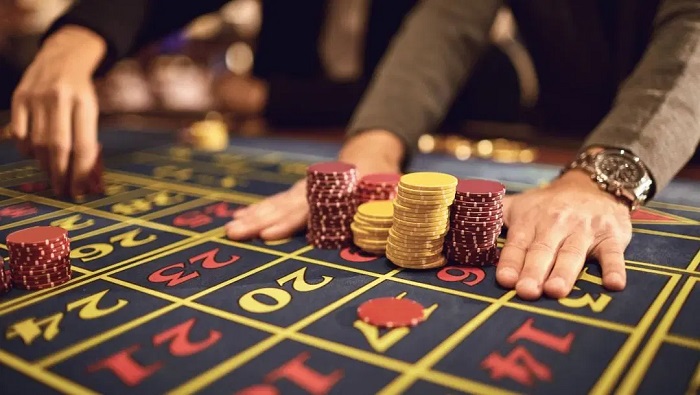
Walking through the gaming floor of a modern casino, the sensory atmosphere is designed to pull attention in every direction. Bright lights illuminate green felt, chips clatter against wooden rails, and dealers move with rehearsed, rhythmic precision. To an inexperienced spectator, table games can look like simple exercises in luck governed by rudimentary rules: hit twenty-one without going over, pick red or black, roll high numbers on the dice, or bet on whichever two-card hand looks stronger.
Beneath that accessible surface lies a complex network of procedural mandates, mechanical nuances, and structural odds. The casino industry does not rely on vague chance; it runs on mathematically verified rules embedded directly into the fabric of each game. Learning how these games actually function—beyond the high-level primers handed out at the concierge desk—reveals why subtle rule adjustments shift the house advantage, how specific player options alter long-term outcomes, and why standard procedures exist at all.
Blackjack: The Hidden Levers of Table Conditions
Blackjack remains the rare casino staple where player decisions directly dictate the house edge. While most patrons understand the basic goal of getting closer to twenty-one than the dealer without busting, few realize that a blackjack game’s true profitability is decided before the first card leaves the shoe. The fine print printed on the felt or displayed on the placard next to the dealer fundamentally changes the game.
Dealer Soft 17 Mechanics
One of the most consequential procedural rules on any blackjack table is whether the dealer must stand on all 17s (often designated as S17) or hit soft 17 (designated as H17). A soft 17 is any seven-card total containing an Ace valued at eleven, such as an Ace-6.
When a table forces the dealer to hit soft 17, beginners often assume it benefits the player because the dealer risks busting. In reality, the opposite is true. While the dealer does bust slightly more often, having a free opportunity to draw another card allows them to transform a mediocre total of 17 into an 18, 19, 20, or 21. This single rule variation increases the house edge by roughly two-tenths of a percent.
Payout Ratios and Defensive Options
An even more drastic shift in modern casinos is the quiet replacement of the traditional 3 to 2 blackjack payout with a 6 to 5 payout.
On a standard 3:2 table, a $10 winning natural blackjack pays $15. On a 6:5 table, that same winning hand pays only $12. This subtle change inflates the casino’s mathematical edge against the player by approximately 1.4%, effectively wiping out the advantage gained through disciplined basic strategy.
Knowledgeable players also look for specific defensive rules:
-
Late surrender: The option to forfeit half your original wager and discard your hand after the dealer checks for a natural blackjack, particularly useful against a dealer showing a 9, 10, or Ace.
-
Double after split (DAS): The permission to double down on hands created immediately after splitting a pair, which opens lucrative opportunities on paired 2s, 3s, and 9s.
-
Resplitting Aces: Most casinos restrict players to one split on Aces, dealing only one card to each. Venues that allow resplitting up to four hands grant players a measurable statistical boost.
Craps: The Two-Phase Engine and True Odds
The craps pit is notoriously intimidating to casual observers due to its energetic jargon and dizzying betting layout. Yet, once the visual chaos is stripped away, the game operates on a clean, cyclical two-phase structure.
The cycle begins with the Come-Out roll. Players wagering on the Pass Line win immediately if the shooter rolls a natural 7 or 11, and lose if the shooter rolls a 2, 3, or 12 (known as craps). Any other number rolled—4, 5, 6, 8, 9, or 10—becomes the established Point.
Once the Point is set, the game transitions into its second phase. The objective flips entirely: the shooter must roll the Point number again before rolling a 7. If the Point hits, Pass Line bets win; if a 7 appears first (termed a seven-out), the round ends, all line bets lose, and the dice pass to the next shooter.
The Mathematics of Free Odds
What elevates craps above almost every other game on the floor is a wager that does not even appear on the printed felt: the Odds bet.
After a Point is established, a Pass Line bettor can take the odds by sliding an additional stack of chips directly behind their original wager. Unlike standard table bets, which feature baked-in house payouts, the Odds bet pays out at true mathematical odds:
-
A Point of 4 or 10 pays 2 to 1.
-
A Point of 5 or 9 pays 3 to 2.
-
A Point of 6 or 8 pays 6 to 5.
Because these payouts mirror the exact probability of rolling those numbers before a 7, the house edge on this specific bet is zero percent. By maximizing the odds behind their line bet, players significantly dilute the casino’s overall advantage across the combined action. Conversely, the high-payout proposition bets occupying the center of the layout—such as Hardways or the one-roll “Any Craps”—carry massive house edges ranging between 9% and 16%, functioning as financial traps for unsuspecting players.
Baccarat: The Rigorous Logic of the Tableau
Pop culture often paints baccarat as a high-stakes guessing game of psychological intrigue. In truth, baccarat is purely mechanical. Once wagers are placed on the Player, Banker, or Tie, the participants have zero agency over how the cards are played. The entire round follows a strictly mandated set of drawing instructions known as the Tableau.
The game aims to identify which hand finishes closest to a value of 9. Face cards and tens count as zero, Aces count as one, and any total exceeding nine drops the first digit (for instance, an 8 and a 7 sum to 15, which becomes a hand value of 5).
If either side receives a total of 8 or 9 on the initial two-card deal, it is declared a natural, and the hand ends immediately. If neither hand holds a natural, the Tableau dictates the flow with absolute precision:
-
The Player hand always acts first, drawing a third card on totals of 0 through 5 and standing on 6 or 7.
-
The Banker hand drawing rules depend not only on the Banker’s current total but also on the specific third card drawn by the Player. For example, if the Banker holds a total of 5, it draws a third card if the Player’s third card was a 4, 5, 6, or 7, but stands if the Player drew an Ace, 2, 3, 8, 9, or 10.
Because the Banker acts second with situational knowledge of the Player’s third card, the Banker holds an innate mathematical advantage, winning roughly 45.8% of hands compared to the Player’s 44.6% (with the remainder ending in ties). To offset this systematic advantage, casinos levy a standard 5% commission on winning Banker bets, bringing the house edge on both positions to a modest 1.06% and 1.24% respectively.
Roulette: Wheel Architecture and French Enclosures
Roulette appears to be the purest expression of mechanical randomness in a casino, but the physical configuration of the wheel alters the player experience dramatically.
An American roulette wheel features 38 pockets: numbers 1 through 36, a single zero (0), and a double zero (00). That extra green pocket might look harmless, but it drives the house edge up to 5.26%. By contrast, a European roulette wheel contains only 37 pockets, omitting the double zero and cutting the house edge down to 2.70%. In recent years, some resort corridors have introduced triple-zero wheels, ballooning the casino’s mathematical take to an exorbitant 7.69%.
The Power of French Rules
In higher-limit parlors or European destinations, games featuring single-zero wheels often introduce traditional French rules that fundamentally protect even-money outside bets (such as Red/Black, Odd/Even, and High/Low):
-
La Partage: When the ball lands on the green zero, players who placed even-money bets immediately receive half of their wager back, while the house retains the other half.
-
En Prison: Instead of surrendering half the bet, the original wager is locked in place for the subsequent spin. If that bet wins on the following spin, the player recovers their original stake in full without a profit; if it loses, the house collects it.
Both variations slice the house edge on even-money propositions to an exceptional 1.35%, transforming a game often dismissed for its rigid house hold into one of the fairest gambles in the building.
The Physical Mechanics of the Pit
Beyond mathematical rules, casino table games are heavily dictated by physical floor procedures engineered to prevent fraud, eliminate ambiguity, and protect surveillance clarity.
In hand-dealt blackjack, players are strictly forbidden from touching their cards with more than one hand to prevent card manipulation techniques. When cards are dealt face-up from a shoe, touching the cards at all is prohibited. Every player intention—whether hitting, standing, or doubling—must be communicated through unambiguous physical hand signals rather than spoken words, ensuring overhead surveillance cameras capture proof of every decision in the event of a dispute.
Similarly, craps dealers mandate that the shooter roll the dice with a single hand, sending them across the full length of the table to bounce against the pyramid-rubber back wall. This textured rubber introduces true unpredictable deflection, invalidating controlled sliding or weighted tossing techniques. Even exchanging cash for gaming chips requires placing physical currency flat on the felt; dealers are expressly barred from accepting bills directly from a player’s hand to avoid blind spots on camera and prevent allegations of collusion.
True mastery of casino table games starts with seeing past the surface glamour. The rules governing payout structures, dealer protocols, drawing charts, and floor security are not arbitrary background details. They are the deliberate mechanical gears that define the game, shape the odds, and separate an informed player from an unprepared spectator.