
Stylish Alternatives to Bulky Snow Boots for City Winters
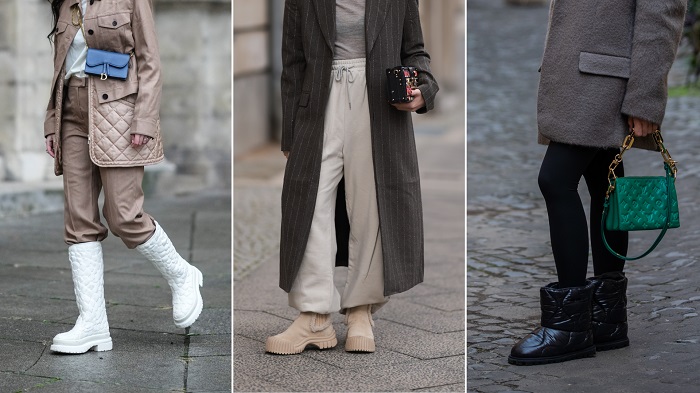
Every November, a familiar tension settles over the urban commuter’s wardrobe. Temperatures plummet, sidewalk slush pools into ankle-deep moats at every intersection, and the morning weather report calls for a treacherous mix of freezing rain and packed snow. For years, the default cultural response has been surrender: pulling on massive, heavily insulated pac boots with two-inch rubber rands, oversized eyelets, and nylon shafts better suited for an ice-fishing expedition in northern Minnesota than a brisk walk through downtown Chicago or Manhattan.
The problem, of course, arrives the moment you step indoors. Heavy-duty arctic boots are engineered for continuous sub-zero exposure, not the pressurized ecosystem of a metropolitan commute. On a crowded morning train or inside an aggressively heated office building, extreme thermal insulation turns feet uncomfortably hot within twenty minutes. Worse still, their bloated proportions thoroughly disrupt the lines of tailored trousers, dark denim, or wool overcoats, forcing urbanites to either accept looking like an off-duty mountaineer or carry a separate pair of indoor shoes in an already overstuffed commuter tote.
City winters present a unique set of challenges that heavy mountaineering boots simply overcomplicate. Navigating slush puddles, salt-encrusted sidewalks, and wet subway tiles demands wet-weather competence, traction, and durability—not bulk. Fortunately, modern footwear engineering has made it entirely possible to bridge the gap between absolute weatherproofing and tailored, sophisticated design.
The Urban Winter Paradox: Rethinking What Boots Actually Need to Do
Before abandoning traditional snow boots, it helps to understand why urban conditions require a fundamentally different design philosophy than backcountry trails. In a city, your primary adversaries are not three-foot powder drifts; they are greasy curb-cut puddles, abrasive rock salt, and slick building entrances.
Bulky snow boots rely on thick felt liners and bulbous, injection-molded rubber footbeds to achieve warmth and water resistance. While effective on frozen lakes, that architecture creates significant liabilities on pavement. The thick, rigid soles provide zero tactile feedback when navigating crowded streets, the excess weight causes premature leg fatigue over miles of sidewalk walking, and the sheer volume of the boot makes tucking or draping pant legs an exercise in frustration.
A truly effective city boot flips this equation. It relies on advanced interior membranes for moisture control rather than thick outer rubber shells, uses low-profile compound outsoles that grip polished granite as readily as wet asphalt, and maintains a streamlined silhouette that integrates naturally into an everyday professional wardrobe.
The Weatherproof Chelsea: The Pinnacle of Commuter Versatility
If there is a single silhouette that has mastered the urban winter transition, it is the refined, weather-sealed Chelsea boot. Originally popularized for equestrian riding and adopted by mid-century artists, the Chelsea’s laceless, pull-on design offers a clean, uninterrupted profile from the vamp up through the ankle.
For winter applications, the key lies in seeking out makers that treat the Chelsea as an all-weather tool rather than fair-weather footwear. A well-constructed winter Chelsea incorporates a few non-negotiable details:
-
Treated full-grain or waxed roughout leather: Rather than fragile, porous calfskins that absorb salty moisture, winter Chelsea boots utilize oily pull-up leathers or reverse suedes impregnated with wax. These surfaces cause slush and brine to bead up and run off before they can penetrate the hide.
-
Waterproof elastic gussets: The traditional weak point of any slip-on boot is the side elastic gore. Cold-weather iterations feature tight-weave, water-resistant elastic or an interior waterproof gusset that prevents water from seeping through when you step off a curb into standing slush.
-
Low-profile lugged outsoles: Rather than giant, jagged cleats that look aggressive and track snow into lobbies, premium winter Chelseas employ slim rubber soles—such as studded Dainite or low-profile Vibram compounds. These designs hide their traction underneath, preserving a formal side-profile that looks identical to a classic dress shoe.
A dark brown, black, or deep burgundy Chelsea transitions effortlessly from an outdoor slush run to a client luncheon. Worn beneath wool trousers or cuffed selvedge jeans, the boot remains completely incognito while keeping your feet bone dry.
The Streamlined Lace-Up Boot: Structured Military Grit
For days when deep snow or icy winds call for a more substantial collar around the ankle, a tailored lace-up utility boot offers structure without clownish proportions.
The secret to avoiding the construction-site aesthetic is selecting boots built on a refined dress last. A boot’s “last” is the physical mold around which it is shaped; industrial work boots use round, bulbous lasts that maximize interior volume, whereas dress-casual boots feature tapered toe boxes and sculpted arches. A tapered last allows a leather lace-up boot to fit cleanly beneath straight-leg trousers without pushing the cuffs outward.
Construction method matters immensely here. Look for boots assembled with a Goodyear storm welt. Unlike a standard flat welt, a storm welt features a curved leather lip that folds upward against the upper leather, creating an impermeable physical barrier against moisture at the vulnerable seam where the sole meets the shoe. Paired with a bellows tongue—which stitches the tongue directly to the eyelet facings along the sides—the boot can handle standing water halfway up your shin without a drop leaking inside.
To combat the visual wear caused by pavement salt, opt for pebble-grain leather. The embossed texture of grain leather naturally disguises small scratches, resists water spotting, and can be wiped clean with a damp cloth at the end of the day far more easily than mirror-shined smooth leathers.
The Anatomy of Sleek Winterization: What Matters Under the Surface
Choosing a winter boot that looks refined requires looking past the surface leather and paying close attention to technical details hidden inside the shoe’s construction.
Invisible Membranes over Heavy Linings
Thick shearling linings feel delightful the moment you slide your feet into them, but they are a liability for anyone spending significant portions of their day indoors. Shearling retains heat aggressively and takes hours to dry out if your feet sweat during a subway commute.
Instead, look for footwear featuring an ultra-thin waterproof-breathable membrane laminated between the exterior leather and the smooth glove-leather lining. These technical barriers allow microscopic water vapor to escape while completely blocking liquid water molecules from entering. You gain absolute submersion protection without adding a millimeter of unnecessary bulk to the shoe’s exterior.
Intelligent Outsole Compounds
Traction in the city is a subtle science. Deep, widely spaced mountain lugs are engineered to dig into loose mud and deep snow; on flat, wet pavement or glazed marble, those same deep lugs actually reduce surface contact, causing you to slip.
For icy concrete and slick tiled floors, look for outsoles featuring siped rubber compounds. Siping refers to microscopic razor-thin slits cut across the rubber tread. When your foot hits the ground, these tiny slits open up, channeling away the microscopic film of surface water and allowing the rubber to make direct, dry contact with the ground. Outsoles infused with specialized cold-weather compounds stay pliable even when the mercury drops, preventing the rubber from hardening into rigid, slippery plastic.
Outsourcing Warmth to Merino Wool
The simplest styling secret for wearing streamlined footwear in freezing temperatures is decoupling insulation from the boot itself.
Rather than relying on permanently built-in boot batting, let your socks do the heavy lifting. High-density merino wool socks offer exceptional thermal regulation, pulling moisture away from the skin and retaining warmth even if damp. By pairing a sleek, uninsulated waterproof leather boot with medium-cushion merino socks, you achieve the exact warmth of a heavy winter boot while walking outdoors. When you arrive at your desk or favorite dinner spot, your feet stay comfortably temperate instead of sweltering.
Hybrid Sneaker-Boots for Everyday Streetwear
For casual workplaces and creative environments where dress boots feel overly formal, technical sneaker-boots have evolved into a formidable alternative.
Discard the bright neon running shoes modified with clumsy rubber overlays. The modern iteration of the urban winter sneaker is sleek, monochromatic, and engineered from the inside out. Leading technical footwear labels now produce high-top leather and suede sneakers equipped with internal waterproof booties, reinforced scuff guards, and discreet lugged outsoles.
Rendered in matte black, olive, or slate grey, a weatherproof leather high-top provides the lightweight agility and shock absorption of an athletic shoe with the weather resistance of a traditional boot. It pairs naturally with technical outerwear, heavyweight fleece, and relaxed chinos, giving you a fast, comfortable option for days spent running across town in mixed precipitation.
Winter in the city does not demand an aesthetic compromise. By prioritizing intentional leather choices, waterproof welt construction, and low-profile grip, you can leave the cumbersome pac boots behind. Stepping over a slush-filled curb in a pair of sharp, tailored boots that refuse to let in a single drop of water is proof that practical utility and refined style can comfortably coexist.


